
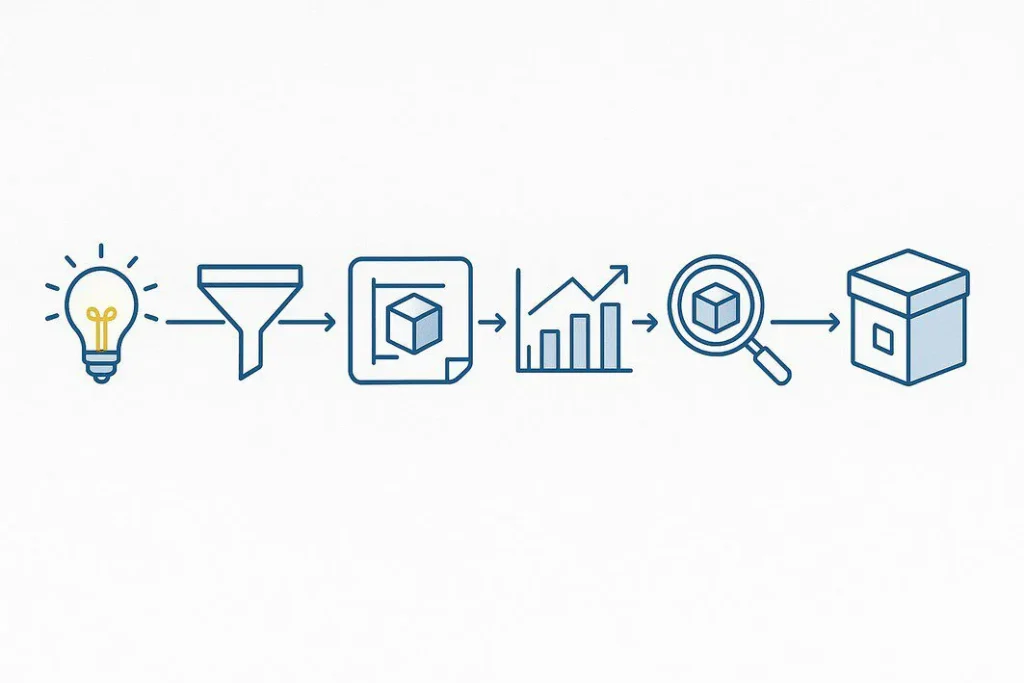
From the smartphone in your pocket to the solar panels on your roof, every successful product begins as a simple idea. But how does that initial spark transform into a tangible, market-ready solution? The answer lies in a structured, strategic framework known as the product development life cycle.
Table of Contents
This proven methodology provides a roadmap that guides a concept from its inception to its launch and beyond. Understanding these product development steps is essential for minimizing risk, maximizing resources, and ultimately, creating a product that customers love. This article will break down the 7 functions of product development, giving you a clear picture of the journey every great product takes.
What is the Product Development Life Cycle?
The product development life cycle is a series of stages that a product goes through, from initial brainstorming to its market debut. It’s a systematic process designed to organize the work, validate assumptions, and ensure that the final product meets a genuine market need in a financially viable way. By following these defined stages of product development, companies can avoid common pitfalls like building the wrong product or running over budget.
The 7 Stages of Product Development
While the specifics can vary by industry, the core process generally follows seven distinct phases. Let’s explore each one.
Stage 1: Ideation & Brainstorming
This is the creative starting point. The goal of the ideation stage is to generate a large quantity of ideas without initial judgment. Inspiration can come from anywhere, including:
- Customer feedback and pain points
- Market research and identifying gaps
- Competitor analysis
- Internal team suggestions
- New technological advancements
The key is to cast a wide net to ensure no potential breakthrough is overlooked.
Stage 2: Idea Screening & Validation

With a pool of ideas, the next step is to filter them down to the most promising candidates. This isn’t about guesswork; it’s about strategic evaluation. Each idea is assessed against a set of criteria, such as market potential, technical feasibility, and alignment with the company’s overall goals.
At RenewGenius, our comprehensive solar knowledge base is critical at this stage. It allows us to quickly validate which new solar technologies or service ideas are truly viable and beneficial for homeowners, separating fleeting trends from genuine innovation.
Stage 3: Concept Development & Testing
A viable idea is now refined into a detailed concept. This involves creating a clear value proposition: What problem does this product solve? Who is the target audience? How is it different from existing solutions?
This detailed concept is then tested with a small segment of the target audience. Through surveys, focus groups, or interviews, the goal is to gather early feedback on the concept itself, long before any significant investment is made in development.
Stage 4: Business Analysis & Strategy
Here, the focus shifts to financial viability. The team conducts a thorough business analysis to determine the product’s potential for success. This involves:
- Cost Analysis: Estimating the costs of development, manufacturing, and marketing.
- Pricing Strategy: Determining a price point that is both competitive and profitable.
- Profit Projections: Forecasting sales, revenue, and return on investment (ROI).
For homeowners considering solar, this stage is crucial. That’s why we developed our own ROI calculator, a tool that helps you perform your own business analysis to see the long-term financial benefits of installing a residential solar system.
Stage 5: Product Development & Prototyping
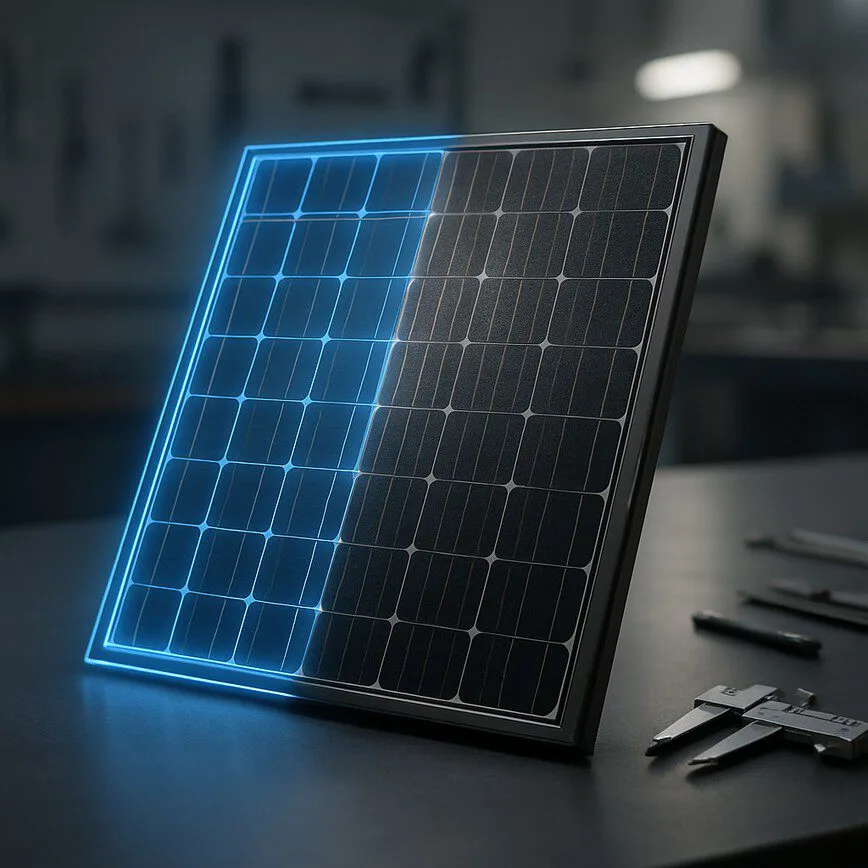
This is where the concept becomes a reality. Designers and engineers work to create the first tangible version of the product, often called a prototype or a Minimum Viable Product (MVP). The MVP includes the core features necessary to solve the primary problem for early adopters. This phase requires meticulous planning and execution to ensure the product is built to specification. For complex projects, understanding the comprehensive product development process is vital for turning the design into a functional prototype efficiently.
Stage 6: Market Testing & Validation
With a working prototype in hand, it’s time for real-world testing. This is often done through beta testing, where the product is released to a limited external audience. The feedback gathered during this stage is invaluable for identifying bugs, usability issues, and opportunities for improvement before a full-scale launch. This iterative loop of feedback and refinement ensures the product is robust and user-friendly.
Stage 7: Commercialization & Launch
Finally, the product is ready for the market. This stage involves the full rollout, supported by a coordinated sales and marketing strategy. Activities include:
- Finalizing branding and packaging
- Ramping up production
- Training the sales team
- Executing a marketing campaign to build awareness and drive adoption
The launch is not the end but the beginning of the product’s life in the marketplace, which will be followed by ongoing monitoring and iteration.
Why Following These Product Development Steps Matters
Navigating the product development life cycle provides the structure needed to turn a great idea into a successful reality. It forces teams to validate assumptions, stay focused on customer needs, and make data-driven decisions. This systematic approach reduces wasted effort, manages costs, and significantly increases the chances of a successful launch.
Partner with RenewGenius for Your Solar Journey
Just as a new product needs a strategic plan, so does your transition to solar energy. At RenewGenius, our focus on residential solar solutions means we’ve perfected the process for homeowners. We leverage our deep industry knowledge to guide you through every step, from initial analysis to final installation, ensuring your solar project is a sound investment.
Ready to see how solar can benefit your home? Use our insights and tools to make your decision with confidence.